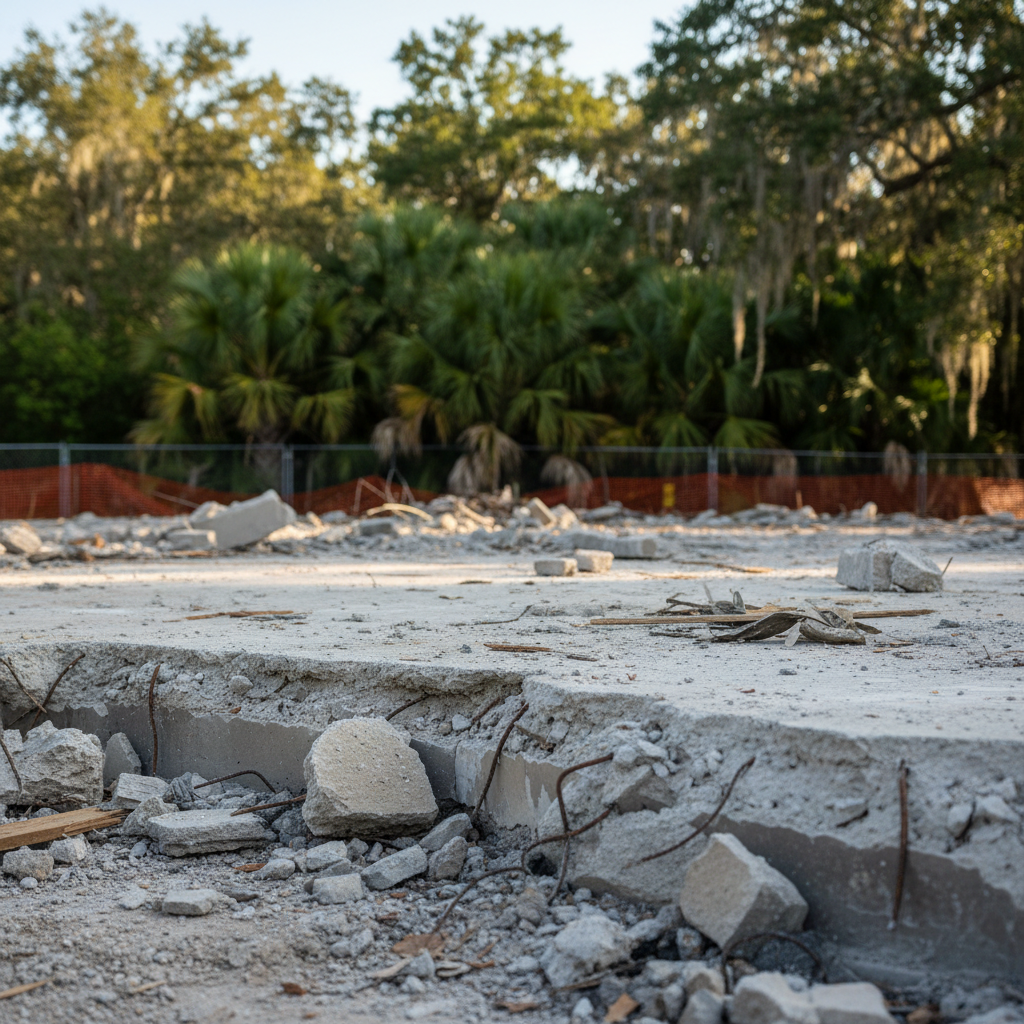
Got an old shed that's seen better days? Maybe you're looking to expand, and that back addition just needs to go. Structural demolition isn't something most folks deal with every day, so it's natural to have a bunch of questions. I get 'em all the time, especially from homeowners right here in Silver Springs. Let's tackle some of the big ones.
Do I really need a permit for demolition?
Absolutely, you do. This isn't like tearing down a cardboard box, after all. Any structural demolition, even for a small shed or a deck, almost always requires a permit from Marion County. People try to skip this step sometimes, thinking it's just a hassle. Trust me, it's not worth it. If you get caught, you're looking at fines, stop-work orders, and a much bigger headache than just getting the permit in the first place. The county wants to make sure the work is done safely, that utilities are properly disconnected, and that there aren't any hazardous materials involved. We always handle the permit process for our clients at Top Notch Demolition because it's a critical first step.
How long does a typical demolition project take?
That's like asking how long a piece of string is, but I can give you a general idea. A small, standalone structure like a shed or a detached garage might only take a day or two of actual demolition work. A larger project, say tearing down an entire house or a significant portion of one, could take anywhere from a few days to a couple of weeks. It really depends on the size, the construction materials, and how easy it is to get to the site. What often takes longer than the actual demo is the prep work: getting permits, disconnecting utilities, and making sure everything's clear. We'll give you a much more precise timeline once we've seen your specific project.
What about utilities? Who handles disconnecting them?
This is a big one, and it's super important for safety. Before any demolition starts, all utilities — electricity, gas, water, sewer, and even communication lines like phone or internet — need safe disconnection. You, as the homeowner, are usually responsible for contacting the utility companies (like Ocala Electric Utility or your gas provider) to schedule these disconnections. We can guide you on who to call and what to tell them, but they'll need to hear from you directly. We won't touch anything until we have confirmation that all services are safely off and capped. It's a non-negotiable safety measure.
Will my property be a huge mess after the demolition?
Look, demolition is inherently messy. There's dust, debris, and a whole lot of broken stuff. But a professional demolition crew isn't just about knocking things down; it's about cleaning up afterward. Our goal is to leave your property as clean as possible, ready for whatever comes next. That means we don't just haul away the big pieces; we sweep, rake, and make sure all the smaller bits are gone too. We'll separate materials for recycling where possible and dispose of everything else responsibly. You won't be left with a giant pile of rubble to deal with yourself.
What happens to all the debris? Is it just dumped somewhere?
Nope, not if you're working with a reputable company. We're pretty conscious about what happens to all that material. A lot of it can actually be recycled. Concrete, asphalt, wood, and metals are often separated and sent to recycling facilities. Things like drywall, insulation, and general construction waste go to approved landfills. We make sure we're following all local regulations for waste disposal. We're not just tearing things down; we're also thinking about how to manage the waste responsibly. Especially with older homes around Silver Springs that might have materials like asbestos (which we'd identify and handle with specialized procedures), proper disposal is crucial.
How much does structural demolition cost?
This is probably the most common question, and it's also the hardest to give a one-size-fits-all answer for. The cost depends on several factors: the size and type of structure, the materials it's made from (e.g., wood frame is generally cheaper to demo than concrete block), accessibility to the site, whether there are hazardous materials like asbestos, and the cost of permits and disposal fees. A small shed might be a few hundred bucks, while a full house demo could be tens of thousands. The best way to get an accurate estimate is to have us come out, take a look at your specific project, and give you a free, no-obligation quote. That way, you'll know exactly what you're looking at.
Hopefully, this clears up some of your demolition questions. It's a big job, but with the right team, it doesn't have to be a headache. If you've got a project in mind, don't hesitate to give us a call.