Thinking About Tearing Out That Old Concrete? Here's Your Plan.
Got a concrete slab, a cracked driveway, or an old patio that's really seen better days? And you're ready to just get rid of it? Good for you! Even a small concrete demolition project needs a bit of planning to go smoothly. I've been doing this kind of work around Silver Springs for years, and believe me, I've seen folks get totally overwhelmed or surprised by the whole process. Don't let that happen to you. Here's what you should know to get your project off the ground without a hitch.
What's the Timeline Look Like?
First things first, let's talk about how long this whole thing actually takes. It's not just the demolition day itself, you know. There are a few stages:
- Initial Inquiry & Consultation (1-2 weeks): You'll probably call a few contractors, including us at Top Notch Demolition, to get some estimates. We'll come out, take a good look at the job – whether it's a small walkway or a whole pool deck – and give you a quote. This usually means scheduling a visit, which can take a few days depending on who's available.
- Permitting (1-4 weeks, sometimes more): This is the part that often catches people off guard. Depending on the size and what kind of concrete you're removing, you might need a permit from Marion County. A small, non-structural patio usually doesn't, but if it's connected to your house, affects drainage, or is part of a bigger renovation, you probably will. Your contractor should be able to guide you here, and sometimes they'll even handle the permit application for you. Seriously, don't skip this step; fines are no fun at all.
- Scheduling the Work (1-3 weeks out): Once you've picked your contractor and the permits (if you needed them) are in hand, you'll get on their schedule. Good contractors are usually booked out a bit, especially during peak seasons when everyone's tackling outdoor projects.
- Actual Demolition (1 day to 1 week): This is the quick part! Most residential concrete removal jobs are done in just a day or two. Bigger jobs, like a full driveway and approach, might take a few days. We're talking about breaking it up, loading it into trucks, and hauling it away.
So, from your first call until that concrete is gone, you're looking at anywhere from a month to two months. Sometimes more, especially if permitting gets tricky or schedules are really tight. Plan ahead, particularly if you have a specific deadline for a new installation.
What to Expect During the Process
When the crew shows up, here's what you'll typically see:
- Noise and Dust: We're breaking up concrete, so yeah, it's going to be loud. Jackhammers, saws, excavators – they all make noise. There will also be dust, especially on dry days. We do our best to control it, but it's just part of the job. You might want to close windows and cover anything delicate nearby.
- Heavy Equipment: Even for smaller jobs, we often use skid steers or mini excavators to break up and load the concrete efficiently. These machines are heavy, so be ready for some temporary marks on your lawn or driveway if we need to get to the work area. We always try to minimize impact, but it's something to be aware of.
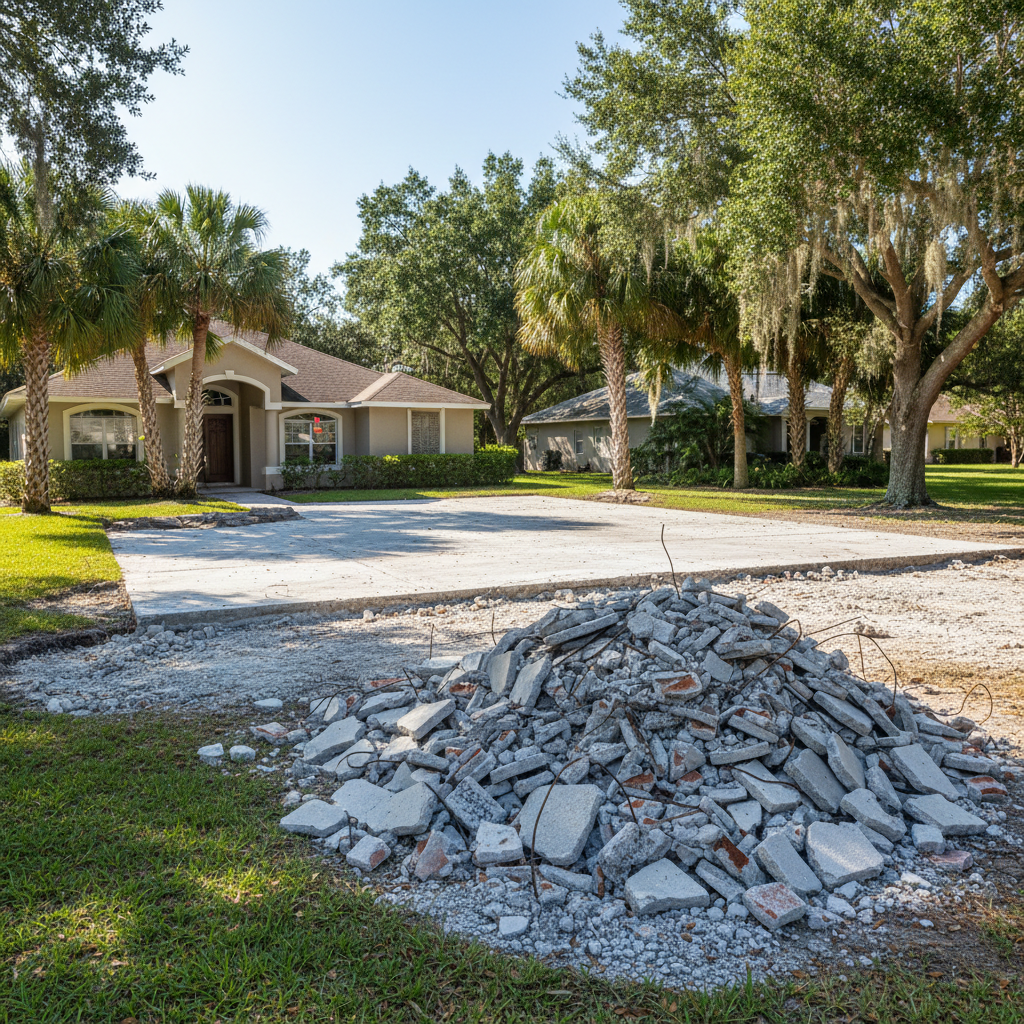
- Debris Hauling: The broken concrete gets loaded into dump trucks. We'll make sure the site is clean of concrete debris before we leave.
- Site Clean-up: After the concrete is removed, we'll do a general clean-up of the area. You'll be left with an excavated space, ready for whatever comes next, whether it's new concrete, landscaping, or just dirt.
How to Prepare Your Property
You can really help make the job smoother and protect your property by doing a few things before we arrive:
- Clear the Area: Move any patio furniture, grills, potted plants, or anything else from around the concrete you want gone. If there are plants you want to save right next to the concrete, let us know, and we'll be extra careful – though sometimes it's just best to move them.
- Mark Sprinkler Heads & Utilities: This is HUGE. If you have an irrigation system, mark your sprinkler heads and lines with flags or spray paint, especially if they run under or near the concrete. Same goes for any buried dog fences, low-voltage lighting, or other shallow utilities you know about. We'll always call 811 for underground utility marking, but those services typically only mark major lines (power, water, gas, cable) and not private irrigation or landscape lighting, right?
- Provide Access: Make sure there's a clear path for our equipment and trucks to get to the work area. Move cars, open gates, and clear any obstacles.
- Communicate: If you have any specific concerns or things you want us to be aware of – like a favorite rose bush right next to the slab or a septic tank in the yard – please tell us beforehand.
Questions to Ask Before You Sign
Don't just go with the cheapest bid. You're investing in your home, and you want the job done right. Here are some questions I'd ask any contractor, including us: