So, you're thinking about knocking something down at your place in Silver Springs? Maybe it's an old shed, a crumbling fence, or an interior wall that just has to go. It's an exciting prospect, no doubt, but before you grab that sledgehammer, let's chat about what's actually involved. I've seen a lot of projects over the years, and trust me, knowing what you're getting into upfront can save you a ton of headaches – and money, for that matter.
Before You Swing That Hammer
First things first: planning is absolutely everything. You really can't just start tearing things down without doing a little homework. Here's what you absolutely need to figure out:
- What exactly are you demolishing? Get specific. Is it a non-load-bearing wall, a small detached structure, or something much bigger? The scope of the work will dictate everything else.
- Permits, permits, permits. This isn't optional. For any significant demolition, you'll need a permit from Marion County. Don't even think about skipping this step. They'll want to know what you're taking down and how you plan to do it. Working without a permit can lead to fines, stop-work orders, and a real mess you don't want to deal with.
- Utilities. This is a big one. You absolutely, positively must identify and disconnect all utilities that run to or through whatever you're demolishing. That includes electricity, gas, water, sewer, and any communication lines. Call 811 before you dig, even if it's just for a small shed foundation. You really don't want to hit a power line or burst a water pipe. Believe me, I've seen it happen, and it's never pretty.
- Asbestos and Lead Paint. If your structure was built before 1980, you have to consider these. Asbestos was pretty common in things like insulation, floor tiles, and roofing materials. Lead paint, on the other hand, was everywhere before 1978. Disturbing these materials without taking proper precautions is a serious health hazard for you and your family. You'll need a certified professional to test for them. If they're present, abatement is definitely not a DIY job; you'll need specialists for that.
What You Can Probably DIY
For the average Silver Springs homeowner, there are some demolition tasks you can realistically tackle yourself. That's assuming, of course, you've done all the 'before' steps correctly and actually gotten your permits.
- Non-load-bearing interior walls: If you're 100% sure it's not holding up the roof, and all electrical and plumbing inside it are disconnected and capped, you can often take these down with a sledgehammer, a pry bar, and a good dust mask. Just be ready for a lot of dust and debris, okay?
- Small sheds or outbuildings: If it's truly small, not on a permanent foundation, and has no utilities running to it, you might be able to dismantle it yourself. Think small wooden structures, not mini-garages, though.
- Decks or fences: These are usually pretty straightforward. Just make sure you're not cutting into any buried utility lines when you're removing posts.
- Interior finishes: Ripping out old cabinets, flooring (unless it's asbestos tile, of course), or drywall is often a DIY job. Again, check for lead paint first!
Always wear proper safety gear: a hard hat, safety glasses, heavy gloves, steel-toed boots, and a good respirator mask. Demolition kicks up a lot of airborne particles and creates sharp hazards.
When to Call a Pro (Like Us at Top Notch Demolition)
Look, I'm all for saving a buck, but some jobs are simply too big, too dangerous, or too complex for a DIY approach. Here's when you absolutely need to bring in the pros:
- Load-bearing walls: If you're not 100% sure a wall isn't structural, don't touch it. Removing a load-bearing wall without proper shoring can cause your roof or upper floor to collapse. This kind of work requires an engineer's assessment and professional execution.
- Anything with confirmed asbestos or lead paint: As I mentioned, this isn't a DIY project. You need specialized equipment and containment for that.
- Large structures or entire home demolition: This is heavy machinery work, plain and simple. We're talking about excavators, bobcats, and experienced operators. Plus, the debris removal alone is a massive undertaking.
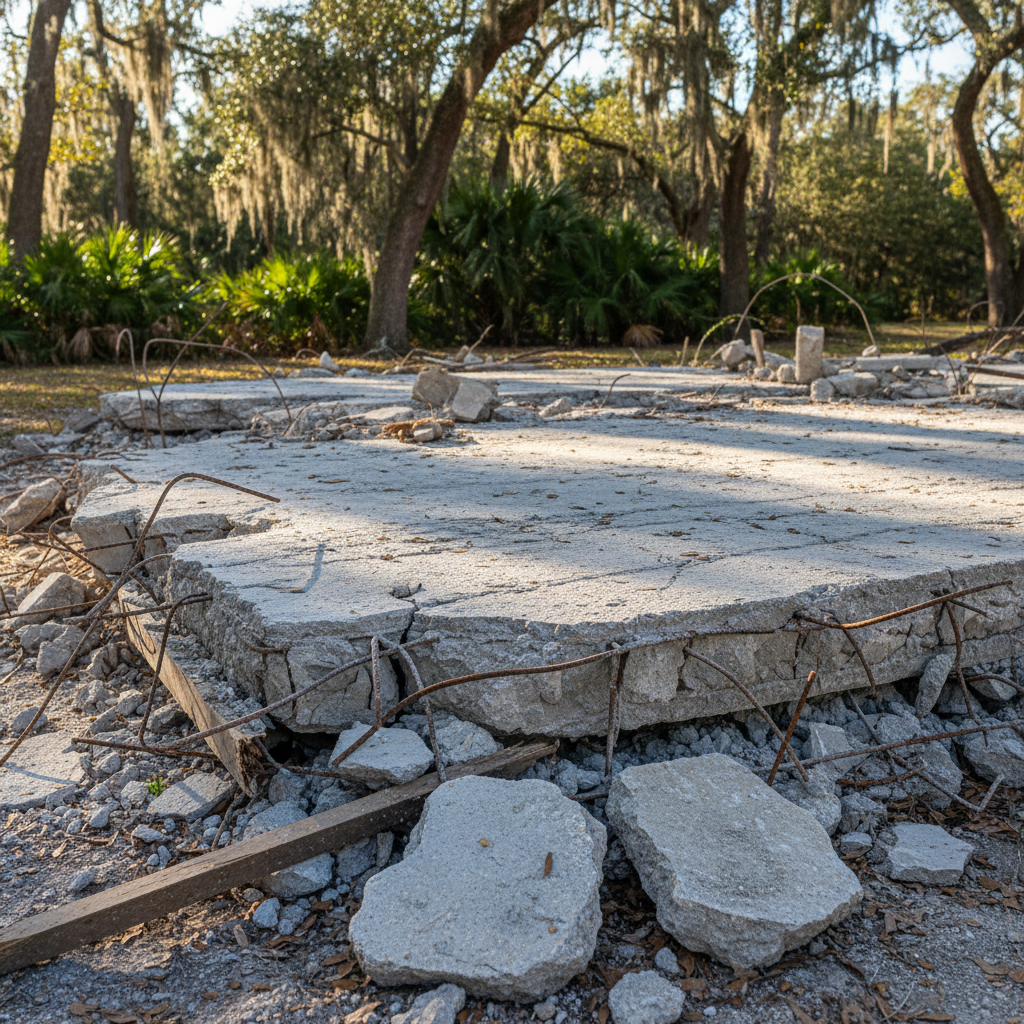
- Foundations or concrete slabs: Breaking up concrete, especially a large slab or foundation, is tough work. It requires specialized tools like jackhammers and can be very labor-intensive. Our sandy soil here in Silver Springs can sometimes make foundations shift, so you really want to ensure any removal or replacement is done right.
- Any project where utilities are complex: If you're dealing with live electrical panels, gas lines, or main water lines, leave it to licensed professionals.
- Time and effort: Even small demo jobs generate a shocking amount of debris. Hauling it all away, especially if it's mixed materials, is a huge chore. We've got the equipment and the disposal channels to handle it efficiently.
After the Dust Settles
Once the demolition is done, whether you did it or we did, you're left with a big pile of material. This is where many DIYers get stuck. You can't just throw construction debris in your regular trash. You'll need to rent a dumpster, or even better, have a service like ours handle the debris removal. We sort materials for recycling whenever possible, which is good for the environment and sometimes for your wallet, too.
You'll also need to prepare the site for whatever comes next. That might mean grading the land, getting it ready for new construction, or just cleaning it up nicely. Make sure your permits are closed out properly with the county once the work is complete.
Demolition can be a great first step to a new project. Just make sure you're doing it safely, legally, and smartly. If you're ever in doubt, give us a call. We're happy to talk through your project and give you an honest assessment of what it'll take.