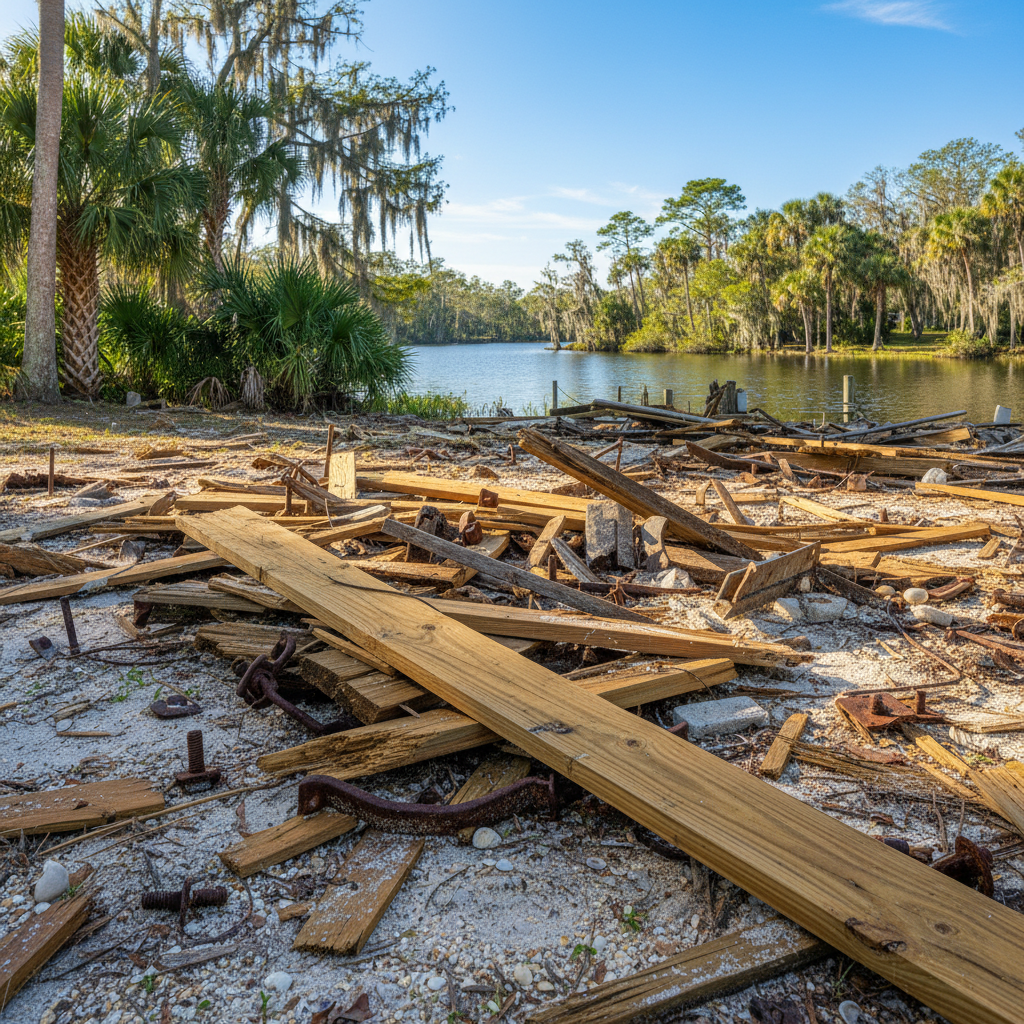
That old dock of yours – the one that's been battered by a few too many summer storms, or maybe it's just not safe anymore – it's probably crossed your mind to get rid of it. I get a lot of calls from folks around Silver Springs asking about dock demolition, and there are always a few common questions that pop up. So, I figured I'd lay it all out for you, straight from what I've seen on the job.
Do I even need a permit to demolish my dock?
Absolutely, you do. This isn't like taking down an old shed in your backyard, you know? You're dealing with navigable waters, even if it's just a small spring-fed canal off the Silver River. The Florida Department of Environmental Protection (FDEP) and sometimes the U.S. Army Corps of Engineers (USACE) get involved, depending on the size and where your dock sits. Marion County also has its own rules. You'll need to show what you're taking out, how you're going to do it, and how you'll keep debris from ending up in the water. It's a whole process, and trying to skip it can land you in a heap of trouble with fines you definitely don't want to pay. We handle all the permitting paperwork for you; it's part of what you pay us for.
What's the process for dock demolition?
It's not just swinging a hammer. First, like I said, permits. That's step one. Once we've got those, we'll check out the dock's structure. Is it wood, concrete, a mix? How old is it? Is it partially underwater? Then we plan the actual removal. We usually start by taking off any decking and railings. After that, we tackle the pilings or structural supports. For wooden docks, we might cut pilings at the mud line or pull them out entirely if they're not too deep. Concrete docks are a different beast; they often need special equipment like hydraulic breakers or even underwater cutting tools. We've got to be super careful not to damage the surrounding environment, especially in our sensitive spring systems here. All the debris gets carefully removed from the water and hauled away.
Can I just do it myself to save some money?
Look, I'm all for DIY when it makes sense. Fixing a leaky faucet, painting a room – go for it. But dock demolition? That's a whole different ballgame. You're dealing with heavy materials, often over water, with the potential for environmental contamination, and strict regulations. You need specialized tools, proper safety gear, and the know-how to handle things like submerged structures or unstable pilings. Plus, the debris removal itself is a big job. You'll need a way to transport large, often waterlogged materials, and dispose of them properly. If you don't do it right, you could end up spending more on fines, environmental cleanup, or even medical bills than you would have hiring a pro like Top Notch Demolition in the first place.
What happens to all the old dock material?
We're really careful about that. Everything we take off your dock gets hauled away. We separate materials as much as possible. Wood can often be recycled or used as fill, depending on its condition and treatment. Metal components, like fasteners or structural steel, go to metal recyclers. Concrete can be crushed and reused as aggregate. The goal is to minimize what goes into a landfill. We make sure it's all disposed of legally and responsibly, keeping our beautiful Florida environment in mind. We don't want any old treated lumber or rusty metal ending up in our springs, do we?
How long does a typical dock demolition take?
That really depends on the size and complexity of the dock. A small, simple wooden dock might only take a day or two of actual demolition work once the permits are in hand. A larger, more complex concrete dock, especially one that's partially collapsed or has significant underwater components, could take a week or more. The biggest variable is often the permitting process itself, which can sometimes take weeks or even months depending on the agencies involved and how quickly they process applications. We'll give you a clear timeline once we've had a chance to assess your specific dock.
What are the biggest risks or challenges you face with dock demolition?
There are a few. Safety is always number one. Working over water, with heavy equipment and often slippery surfaces, presents its own set of hazards. Environmental protection is another huge one. We've got to make sure no debris, chemicals, or fuel spill into the water. The soil conditions around Silver Springs can also be a factor; some areas have very soft, mucky bottoms, which makes equipment access and piling removal more challenging. Unexpected structural issues, like discovering more extensive damage or different materials than anticipated, can also pop up. But we've got the experience to handle these things when they do.
Will my property be a mess after you're done?
No way. Our job isn't finished until your property is clean. We'll remove all the debris, clean up any stray bits of wood or metal, and leave the area as tidy as possible. We treat your property like it's our own. You won't be left with a pile of junk or a muddy mess where your dock used to be. The goal is for you to have a clean slate, ready for whatever you plan next, whether that's a new dock or just enjoying your waterfront view without the old eyesore.