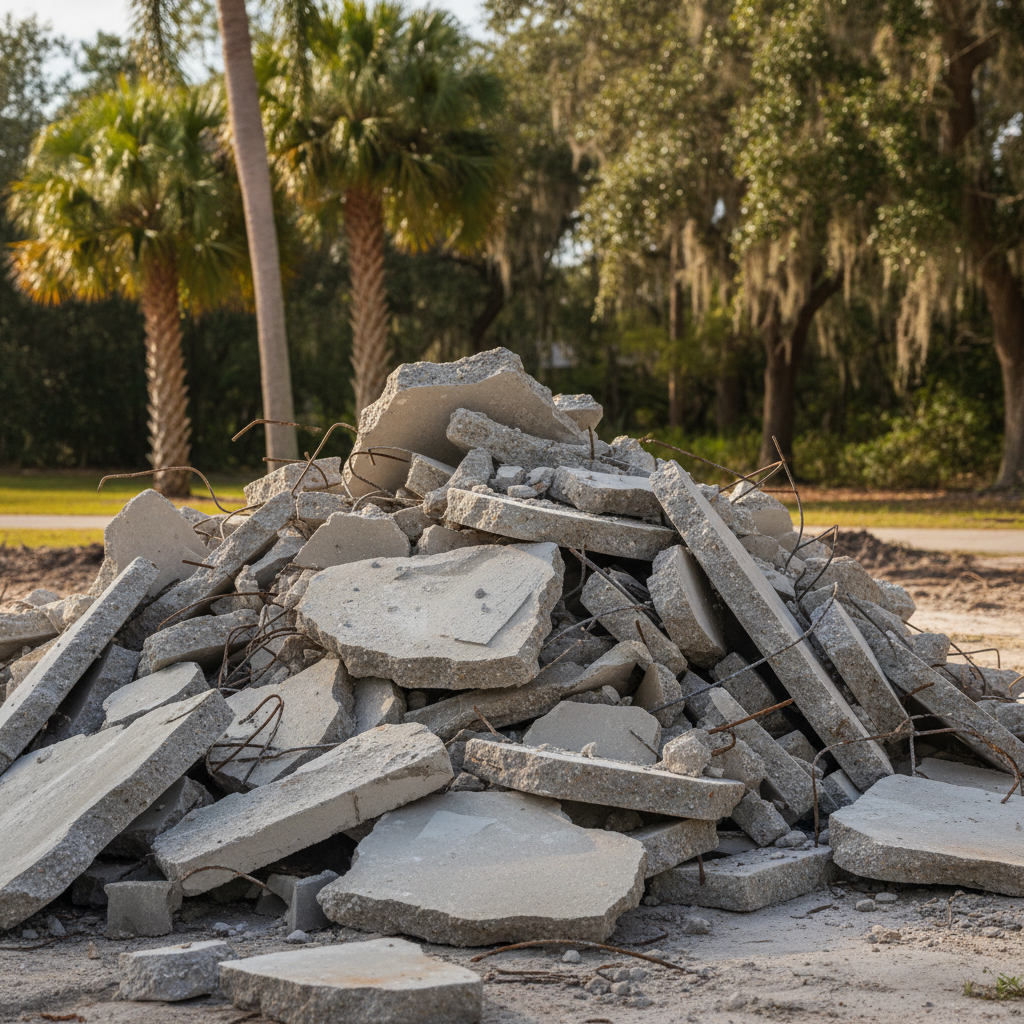
Alright, let's talk concrete. You've got an old patio, a cracked driveway, maybe a shed foundation that's seen better days, and you're thinking it's time for it to disappear. Good call. But before you grab a sledgehammer and go to town, you probably have some questions. I hear 'em all the time from folks right here in Silver Springs, Florida. So, let's get into the nitty-gritty of concrete demolition.
What's the best way to break up concrete?
Honestly, it depends on the concrete's size and thickness, and what's underneath it. For smaller, thinner slabs, say a sidewalk section or a small patio, a heavy-duty jackhammer — or even a good old sledgehammer — can do the trick. But for bigger stuff, like a thick driveway or a large foundation, you're looking at more serious equipment. We're talking hydraulic breakers attached to excavators, or specialized concrete saws for controlled cuts. Trying to tackle a 6-inch thick slab with just a sledgehammer? You'll be at it all week, and your back won't thank you. Plus, you risk damaging underground utilities if you're not careful about what's below, which is a real pain.
How long does a typical concrete demolition project take?
This is a tough one to give a universal answer to because every job's different. A small, accessible patio might be a half-day job for a professional crew. A large, reinforced concrete driveway, especially if it's got rebar or a tricky location, could take a couple of days, maybe even longer if there are access issues or extensive debris removal. What we find often adds time here in Silver Springs is dealing with the sandy, sometimes soft soil once the concrete's gone. It can make equipment movement a bit slower, and sometimes requires extra care during debris loading.
Do I need a permit to demolish concrete on my property?
For most residential concrete demolition projects, like taking out a driveway, patio, or walkway, you typically don't need a specific demolition permit from Marion County. However, if the concrete is part of a larger structure that's being demolished — like a shed foundation integral to the structure, or if you're doing extensive work that might impact drainage or property lines — then yes, you might need one. It's always best to check with the county's building department before starting any significant work. A quick phone call can save you a lot of headaches down the road. Don't just assume; verify.
What happens to all the broken concrete?
That's a big part of the job, and it's not something you want to overlook. Broken concrete, or 'rubble,' is heavy and takes up a lot of space. Most of it gets hauled away to a transfer station or a recycling facility. Concrete is pretty good for recycling; it can be crushed down and used as aggregate for new construction projects, fill material, or even road base. We at Top notch demolition always aim to recycle as much as possible. It's better for the environment and often more cost-effective than just dumping it in a landfill.
Will concrete demolition damage my yard or landscaping?
It's definitely a risk, especially with larger projects. Heavy equipment can compact soil, leave ruts, and obviously, anything directly adjacent to the concrete being removed might get disturbed. We do our best to minimize impact by using plywood sheets for equipment paths, careful maneuvering, and strategic planning. But if you have prize-winning azaleas right next to that old concrete slab, be prepared for them to potentially take a hit. We'll discuss these things upfront so you know what to expect. Sometimes, a little landscaping repair is just part of the overall project cost, isn't it?
Can I save money by doing some of the work myself?
You can, but you need to be realistic about what 'some of the work' means. If you're talking about clearing away some shrubs before we arrive, or maybe even helping with some of the smaller debris cleanup after the heavy lifting is done, then sure, that could shave off a bit of labor cost. But trying to break up a significant amount of concrete yourself without the right tools, knowledge, or safety gear is usually a bad idea. You risk injury, property damage, and often end up spending more time and money than if you'd just hired a professional from the start. We've seen it happen too many times. Know your limits, and know when to call in the pros.
How much does concrete demolition cost?
Ah, the million-dollar question. It varies wildly. Factors include the total square footage, the thickness of the concrete, whether it's reinforced with rebar, accessibility to the site, and the cost of debris disposal. Disposal costs are a big one around here; concrete is heavy, and that weight adds up on the trucking side. We need to come out, take a look, and give you a proper estimate. Don't trust anyone who gives you a flat rate over the phone without seeing the job. There are too many variables. We'll give you a clear, itemized quote so you know exactly what you're paying for.
What should I do to prepare for concrete demolition?
First, clear the area. Move anything that's in the way – patio furniture, planters, garden gnomes, whatever. If there are plants you want to save, dig 'em up and move 'em. Second, make sure we have clear access for our equipment. That might mean moving cars or opening gates. Third, mark any underground utilities that you know about, like sprinkler lines or low-voltage lighting, if they're close to the work area. We'll always call 811 to get public utilities marked, but private lines are your responsibility. A little prep work from your end can make the whole process smoother and quicker for everyone involved.